Over the past week, the team at Oba Global Citizen Africa spent valuable time with smallholder farmers in the Kalong community, Plateau State, advancing a critical phase of the FarmFood4All banana project. This stage of the initiative focuses on data collection to profile farmers and enable full traceability across their farms. To date, the project has captured data for up to 100 hectares of farmland, and the work continues with the aim of scaling to thousands of hectares in the coming months.
Each visit highlights a stark and persistent challenge: how can farmers cultivate the same land for 15 to 20 years yet see minimal improvement in their livelihoods? Many smallholder farmers managing multiple hectares still lack fundamental knowledge about their crops—ranging from variety, production volume, and exact farm size to marketable output. Reliance on traditional, informal selling channels often limits income potential and access to broader market opportunities.
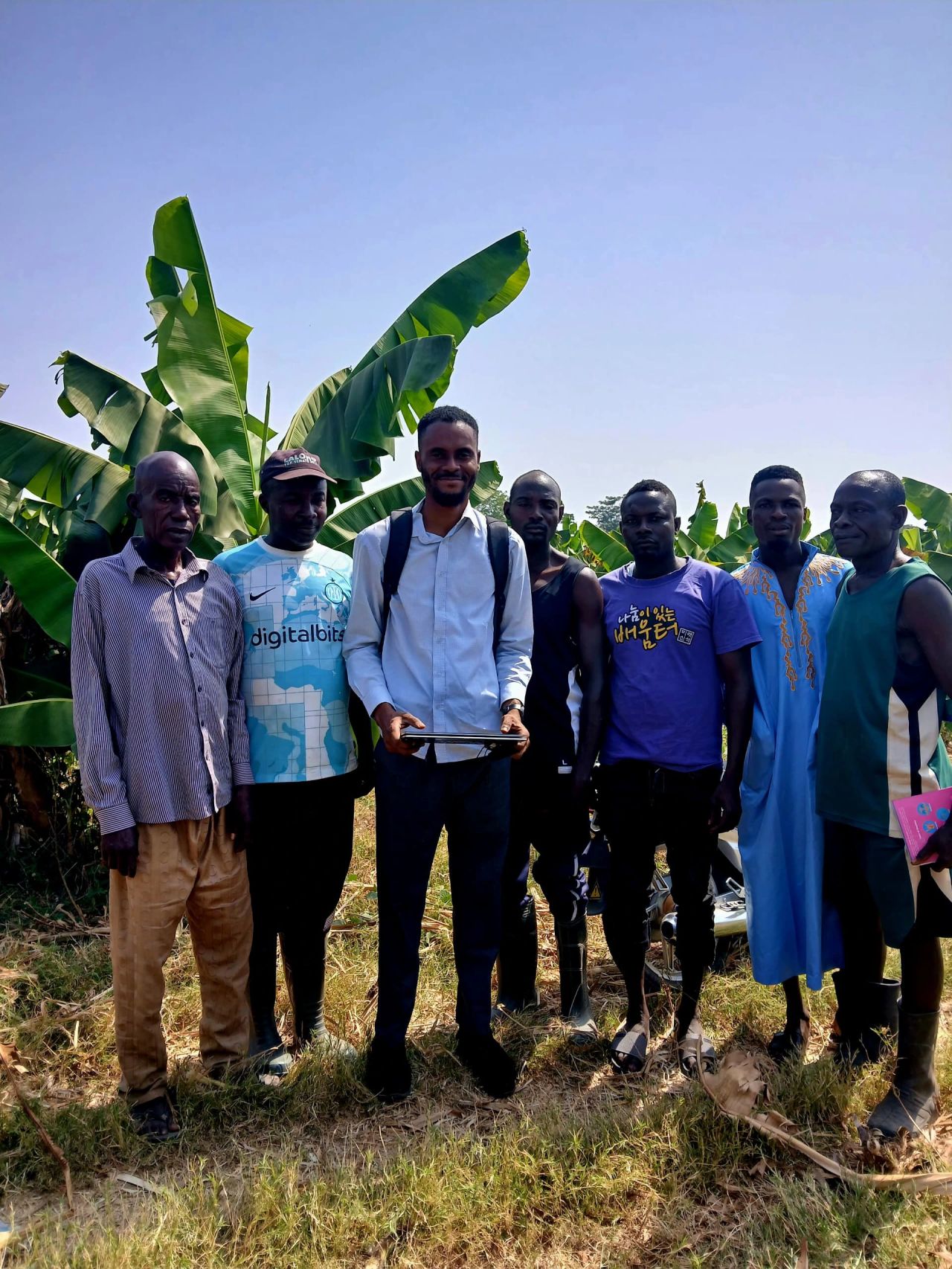
Drawing inspiration from international best practices—such as the farmer-focused approach at Beck’s Hybrids in the United States, the nation’s leading family-owned agricultural business—Oba Global Citizen Africa is committed not only to promoting sustainable and green farming practices but also to improving the economic well-being of smallholder farmers.
Through FarmFood4All, we are building a digital, data-driven platform that safeguards farmer information while providing actionable insights to improve productivity, enhance market access, and strengthen decision-making. Already, over 10,000 smallholder farmers cultivating a diverse range of crops are integrated into this system, and the database continues to grow.
By bringing national and international opportunities in the agri-food sector closer to farmers, and coupling them with local, sustainable support, Oba Global Citizen Africa ensures that smallholder communities are not only participants in the food system but active beneficiaries of its growth.
The enthusiasm among the farmers in Kalong was palpable. Every interaction reinforced their eagerness to embrace new tools, technologies, and market strategies—proof that knowledge, empowerment, and proper support can transform smallholder agriculture in Nigeria.
This initiative is further strengthened through collaboration and insights from global partners, including FAO, the International Fund for Agricultural Development (IFAD), the Netherlands Agricultural Network, and the World Food Programme Youth Assembly (WFF Youth Assembly)—ensuring that FarmFood4All aligns with both local realities and global best practices.
FarmFood4All continues its mission to create resilient, empowered, and economically thriving farming communities, demonstrating that sustainable agriculture is most impactful when coupled with traceability, data-driven insights, and a clear path to improved livelihoods.